

12 Principles of Animation
September 1, 2026
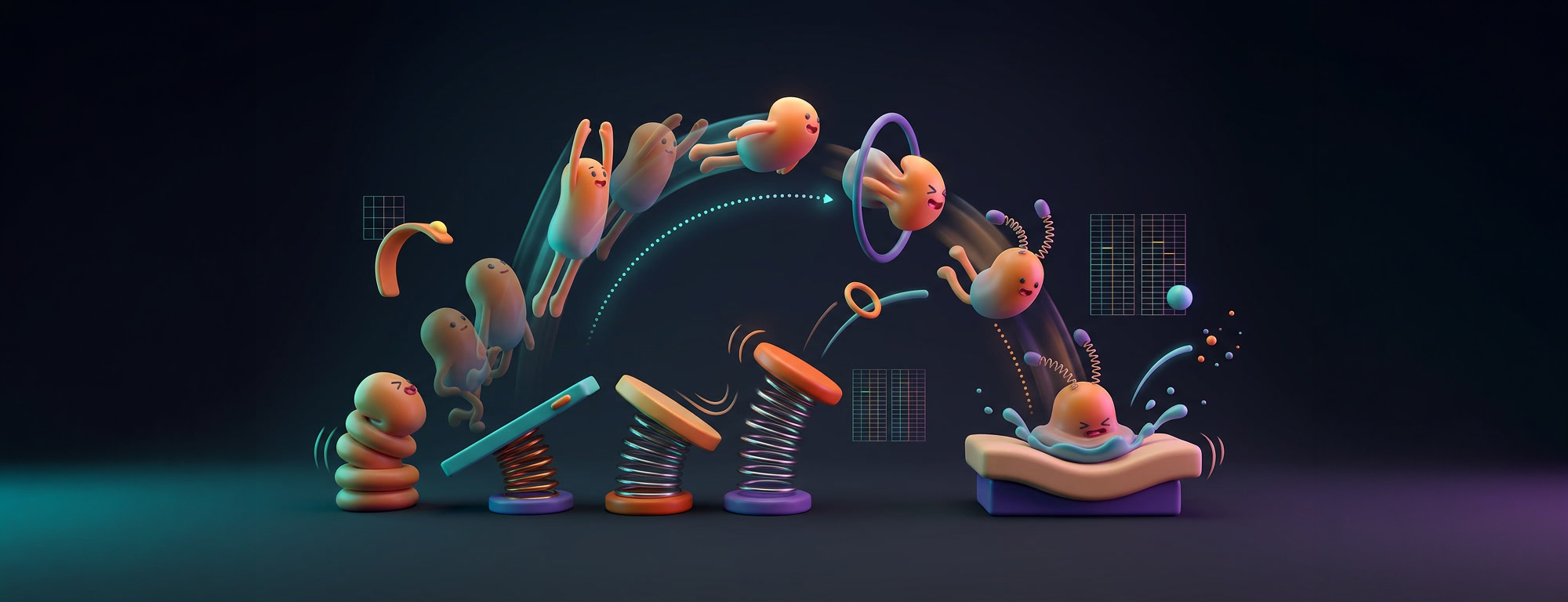
Squash and Stretch: Gives objects and characters weight and flexibility by compressing or elongating them while keeping total volume constant.
Anticipation: Prepares the audience for a major action through a smaller preparatory movement or wind-up.
Staging: Directs the viewer's attention and makes the main idea, action, or mood of a scene immediately clear using composition and framing.
Straight Ahead Action and Pose to Pose: Two different workflows—drawing frame-by-frame for fluid spontaneity versus sketching key poses first and filling in the middle frames later.
Follow Through and Overlapping Action: Shows inertia and physics where parts of a body or attached objects keep moving or lag behind after the main body stops.
Slow In and Slow Out: Mimics real-world acceleration and deceleration by adding more frames at the beginning and end of a movement and fewer in the middle.
Arcs: Ensures natural, organic movement follows a curved trajectory rather than a robotic straight line.
Secondary Action: Adds smaller, supporting gestures or details that enrich the primary action without distracting from it.
Timing: Controls the speed and mood of a movement by adjusting the number of frames or drawings.
Exaggeration: Pushes poses, facial expressions, or physical reactions to an extreme degree for dramatic or comedic impact while staying grounded in realism.
Solid Drawing: Gives 2D characters a sense of three-dimensional volume, weight, and balance.
Appeal: Gives characters charm, charisma, and a design that connects with the audience.

Animator, designer, and illustrator
Sharing is caring
If you found value in this blog post, please take a moment to share it on social media.


