

island of the sea goddess
October 16, 2026
Meizhou Island, off the coast of Putian in Fujian, is known as the birthplace of Lin Moniang, the woman revered as Mazu. My visit brought together coastal views, temple architecture, and a tradition rooted in the sea. This photo journal follows the places and details I photographed along the way.
Across the water
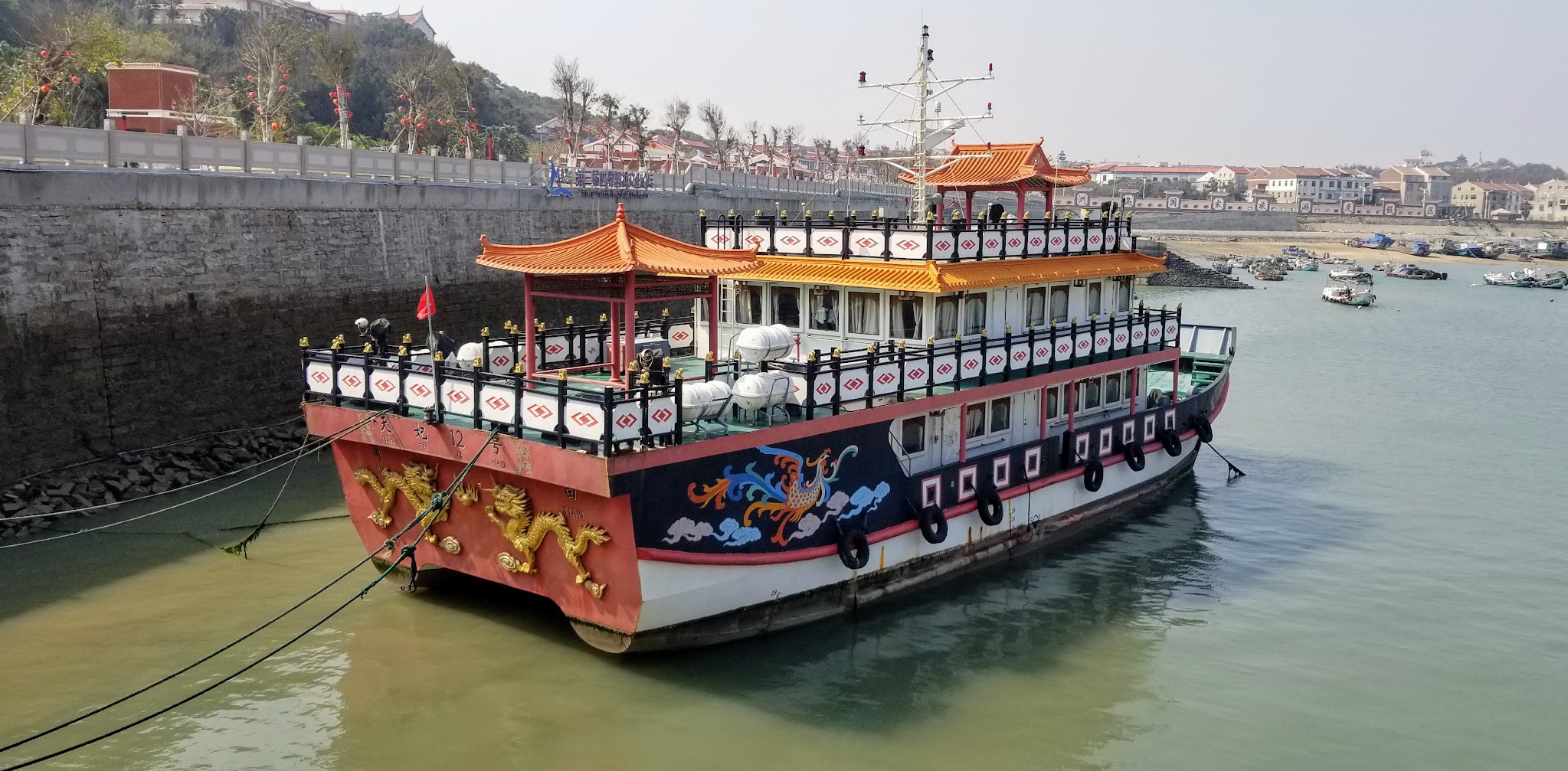
My Meizhou Island photo journal begins at the water. The boat in my harbor photograph carries orange roofs, painted ornament, and golden dragons: a small introduction to the colors and craftsmanship that appear throughout the temple grounds. Even here, the island’s maritime setting and its visual culture share the same frame.
A hillside of temples
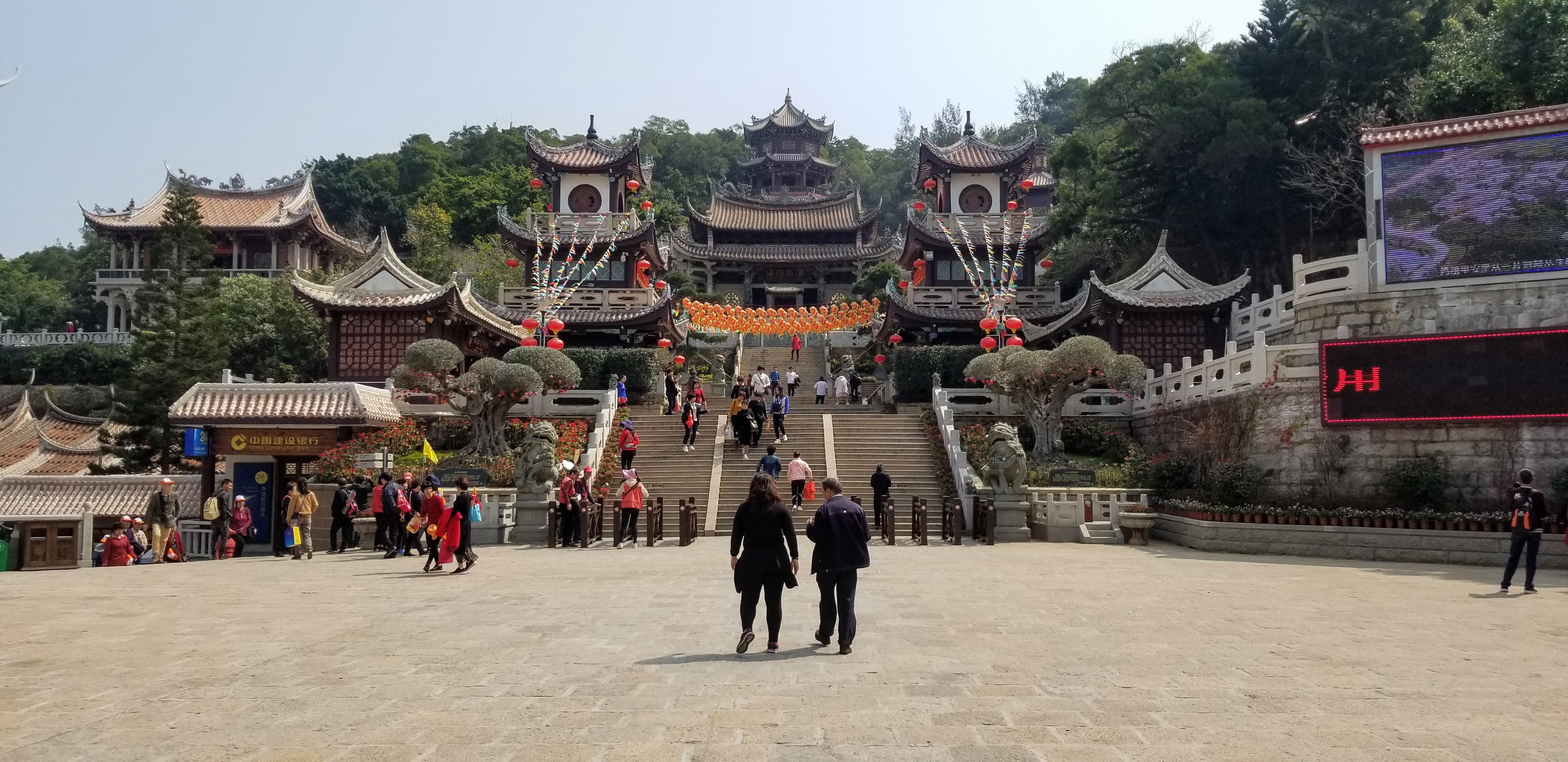
From the waterfront, the photographs move into a landscape of stairs, courtyards, and layered roofs. Visitors pass beneath lanterns toward buildings set against a green hillside. The scale unfolds gradually, with each flight of steps revealing another roofline rather than the whole complex at once.
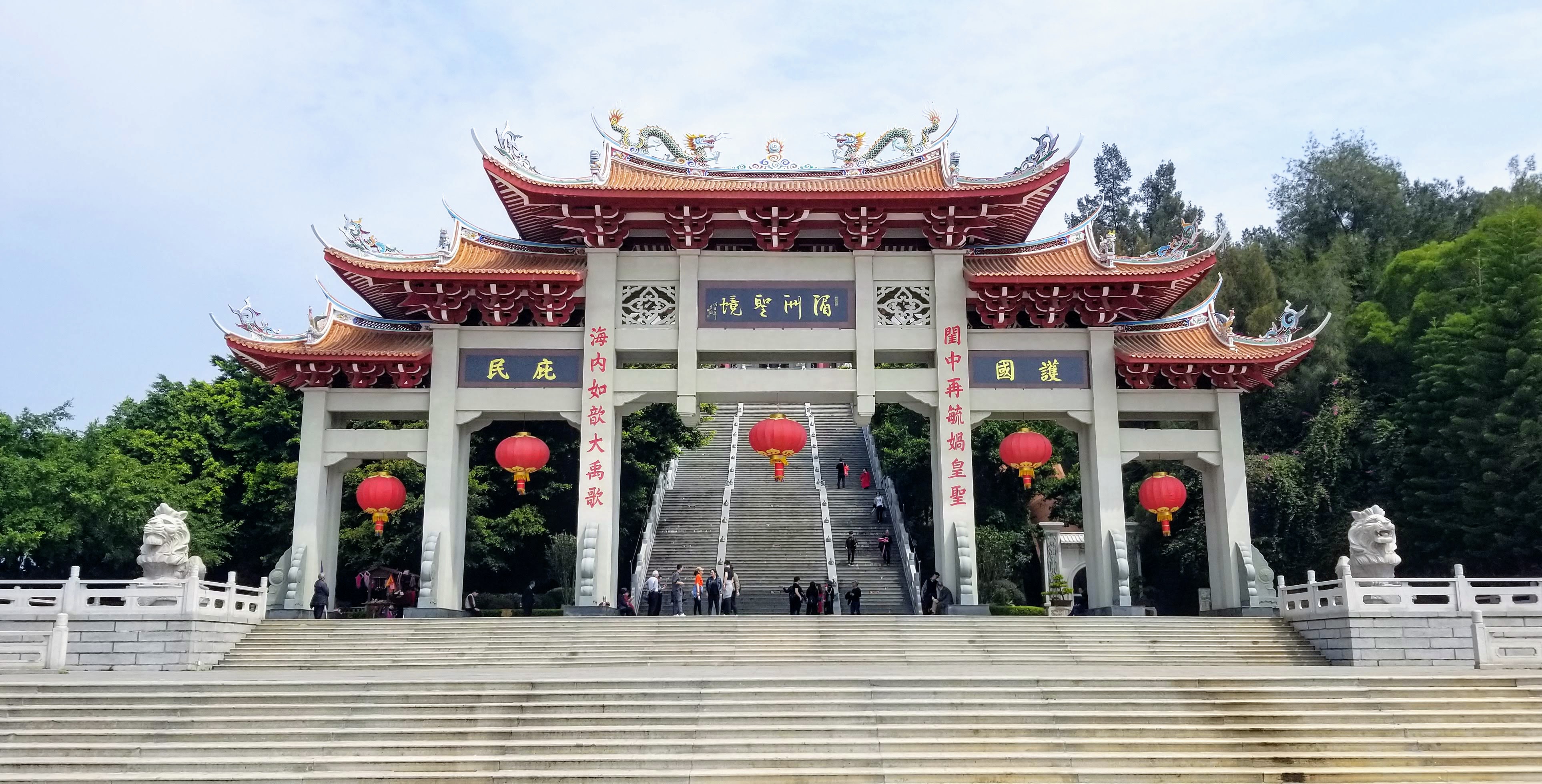
Through the paifang
The monumental paifang makes a striking threshold. Pale stone pillars hold up red brackets and tiled roofs, while dragons curl along the ridges above. Seen from the front, the symmetry becomes especially clear: the lanterns, openings, and long staircase create a strong central line through the photograph.
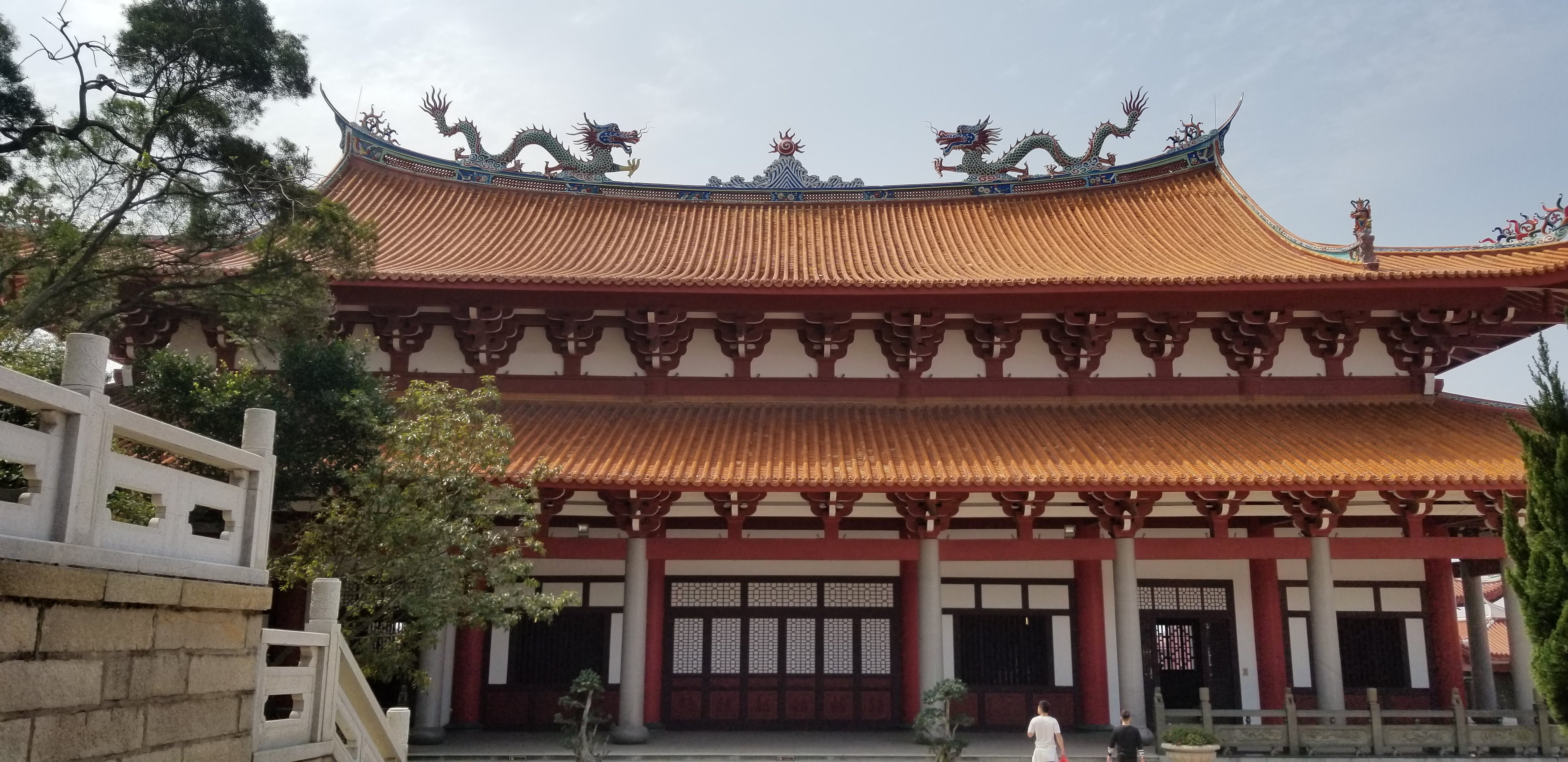
Reading the roofline
Looking closer changes the scale of the visit. Rows of orange tiles become a repeated pattern; red brackets create a rhythm beneath the eaves. Along the roof ridge, sculpted dragons break that repetition with movement. These details give the architecture as much character as its monumental entrances.
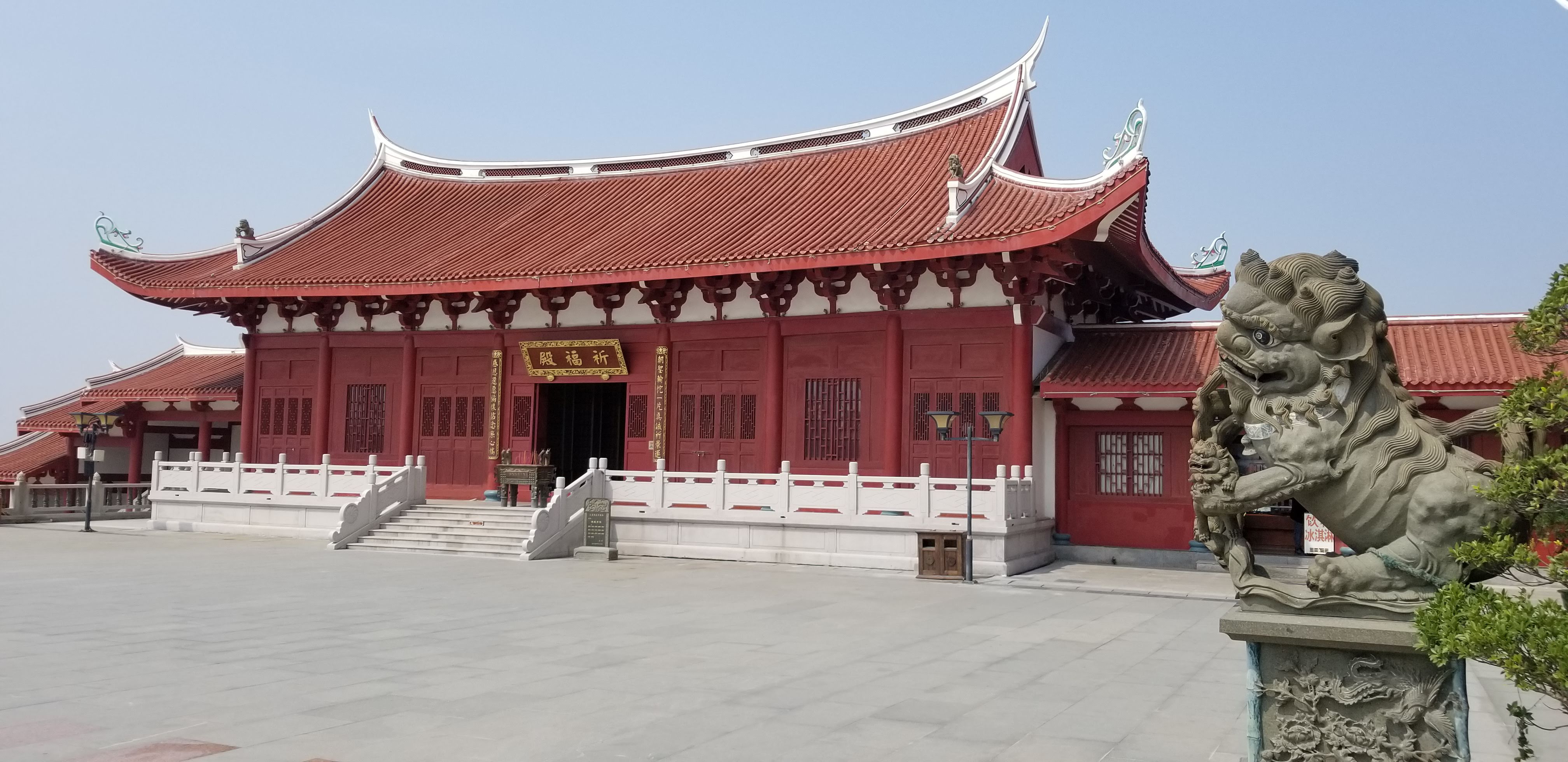
Guardians at the door
A stone guardian lion fills the foreground of this temple view. Its carved mane, open mouth, and rounded forms contrast with the long, orderly lines of the hall behind it. The photograph holds both scales together: an expressive sculptural detail and the quiet geometry of the courtyard.
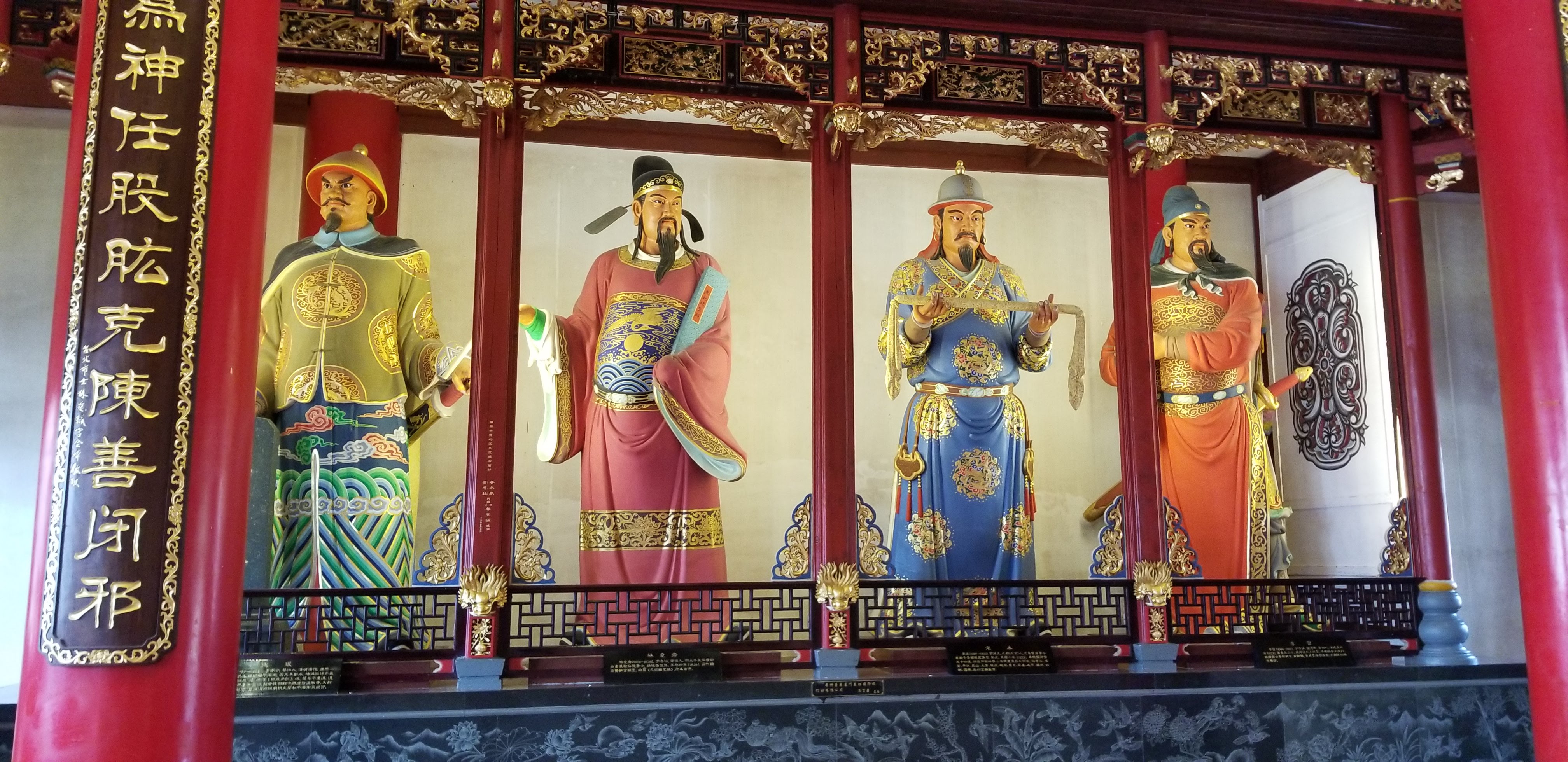
Color within
Inside, the palette becomes richer. Red columns frame figures dressed in blue, yellow, orange, and rose, with gold ornament running across their robes and the surrounding woodwork. Each figure has a distinct expression and costume, while the repeated red columns bring them together.
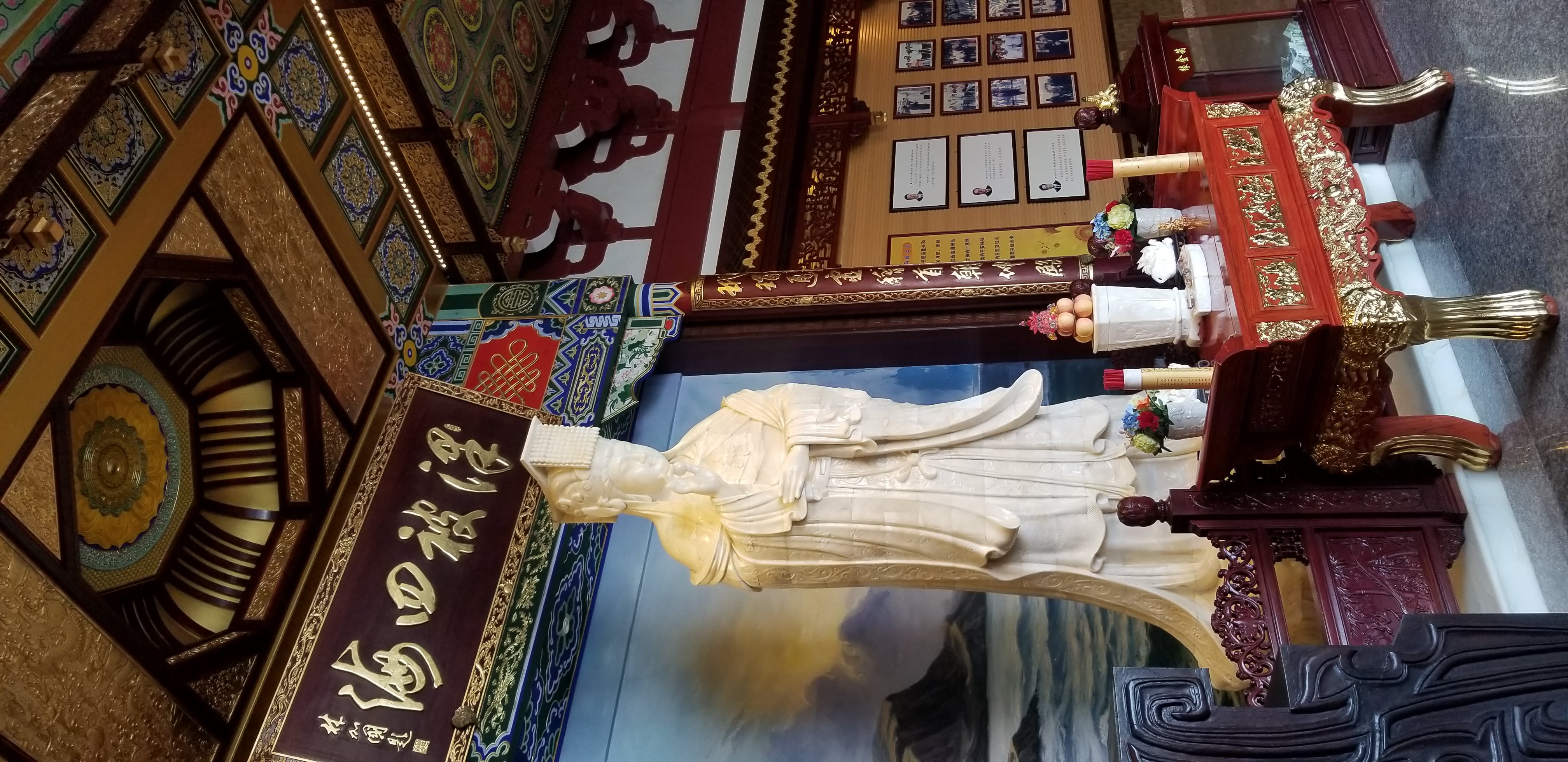
Lin Moniang, remembered
At the center of this journey is Lin Moniang, also known as Lin Mo, revered as Mazu, the sea goddess. Tradition places her birthplace on Meizhou Island. In this interior photograph, a pale statue stands against painted waves beneath an elaborate ceiling, bringing the human figure and the sea into one setting.
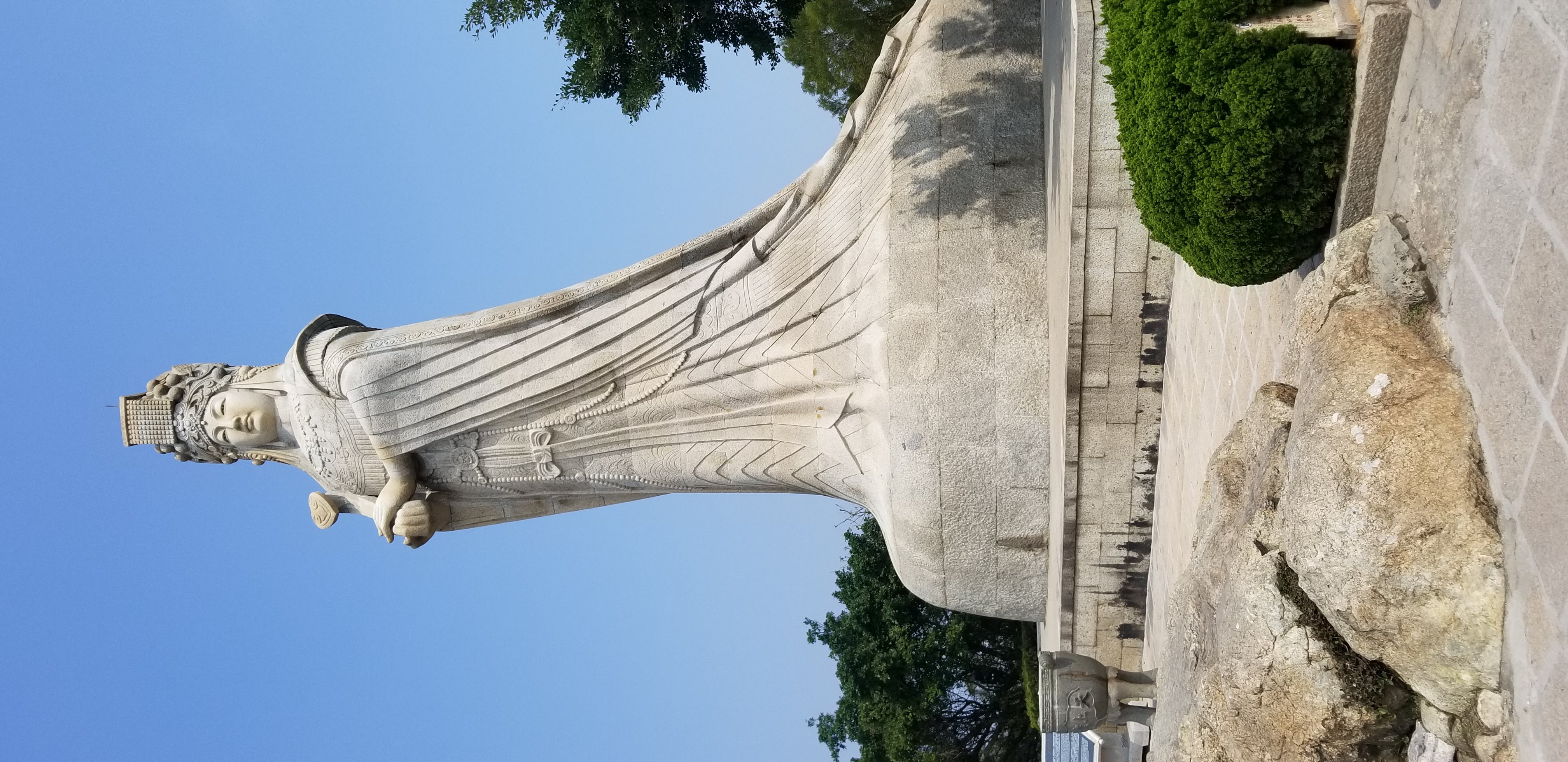
Mazu beneath the sky
The outdoor statue offers a different encounter with the same figure. Against the blue sky, the stone silhouette is clear and expansive, with carved folds flowing toward the base. The figure rises above the surrounding trees, its gaze turned outward beneath the open sky.
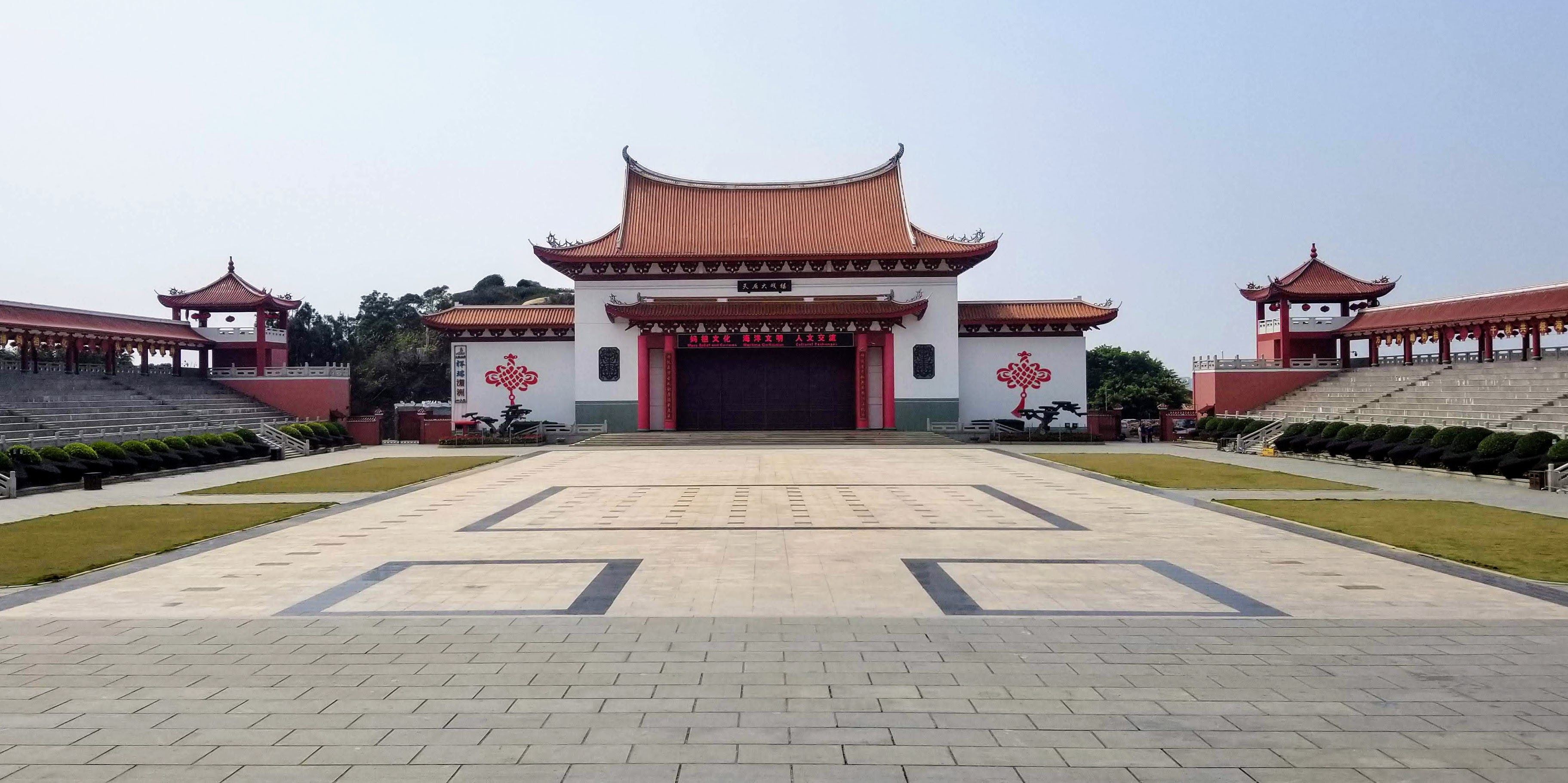
Space for gathering
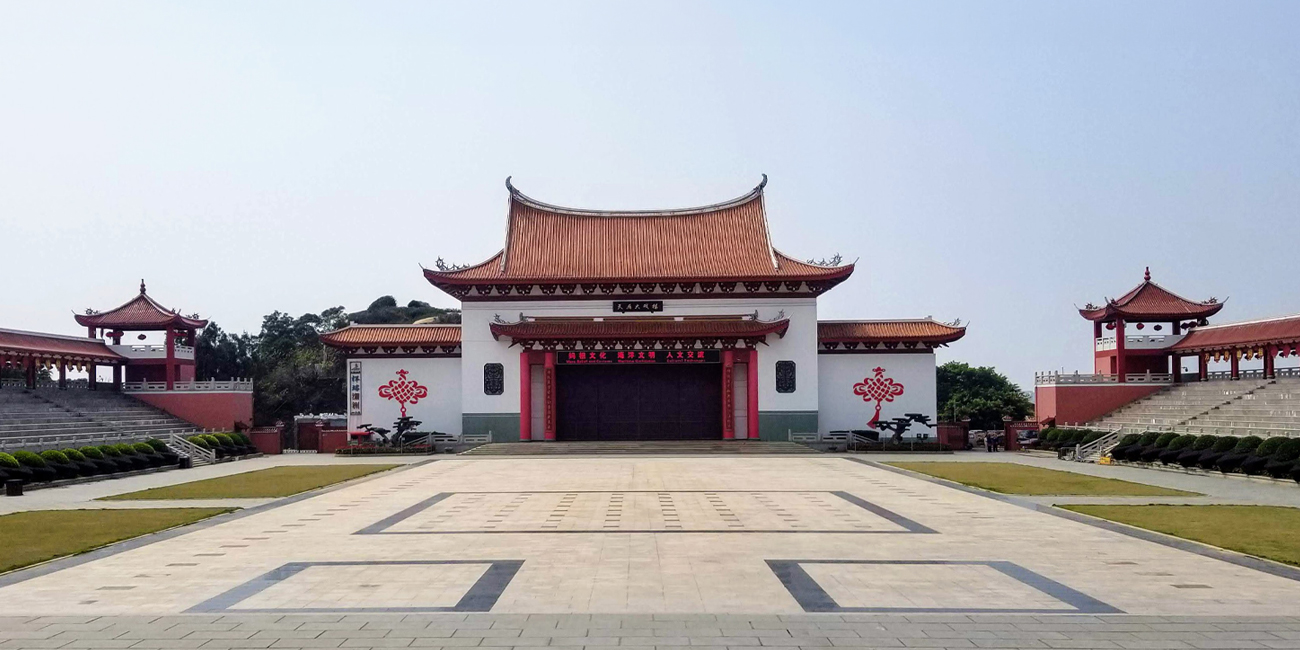
The broad courtyard introduces another kind of scale: space made for people to gather. Its paving leads toward a central stage, with covered walkways extending to either side. In this quieter moment, the symmetry and generous open ground stand out.
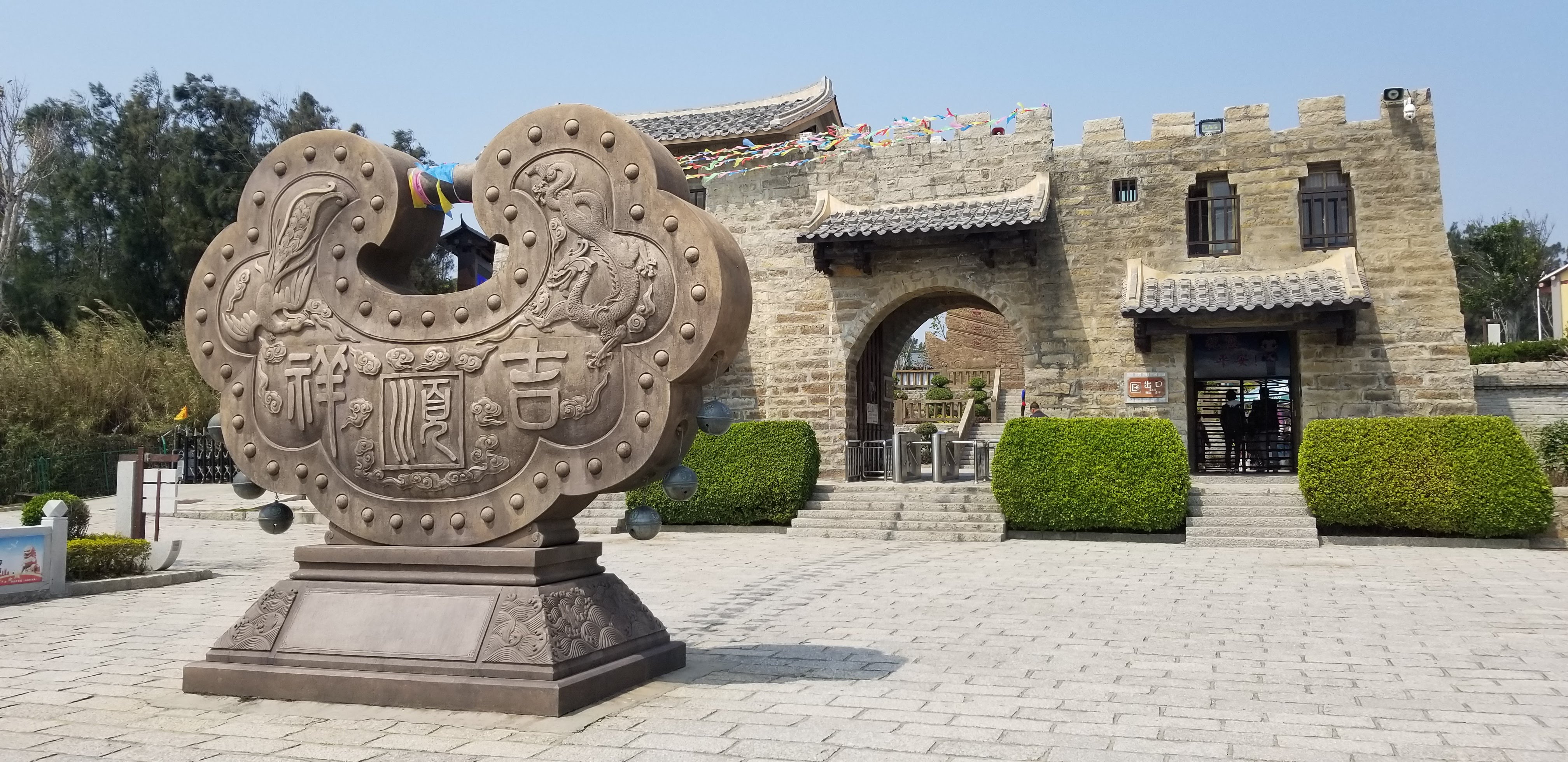
A final carved detail
A large ornamental stone lock offers one more example of the island’s detailed carving. Dragon and phoenix motifs fill its surface, while the stone gateway behind it provides a simple architectural backdrop. Details like this make the grounds rewarding to explore beyond their best-known landmarks.
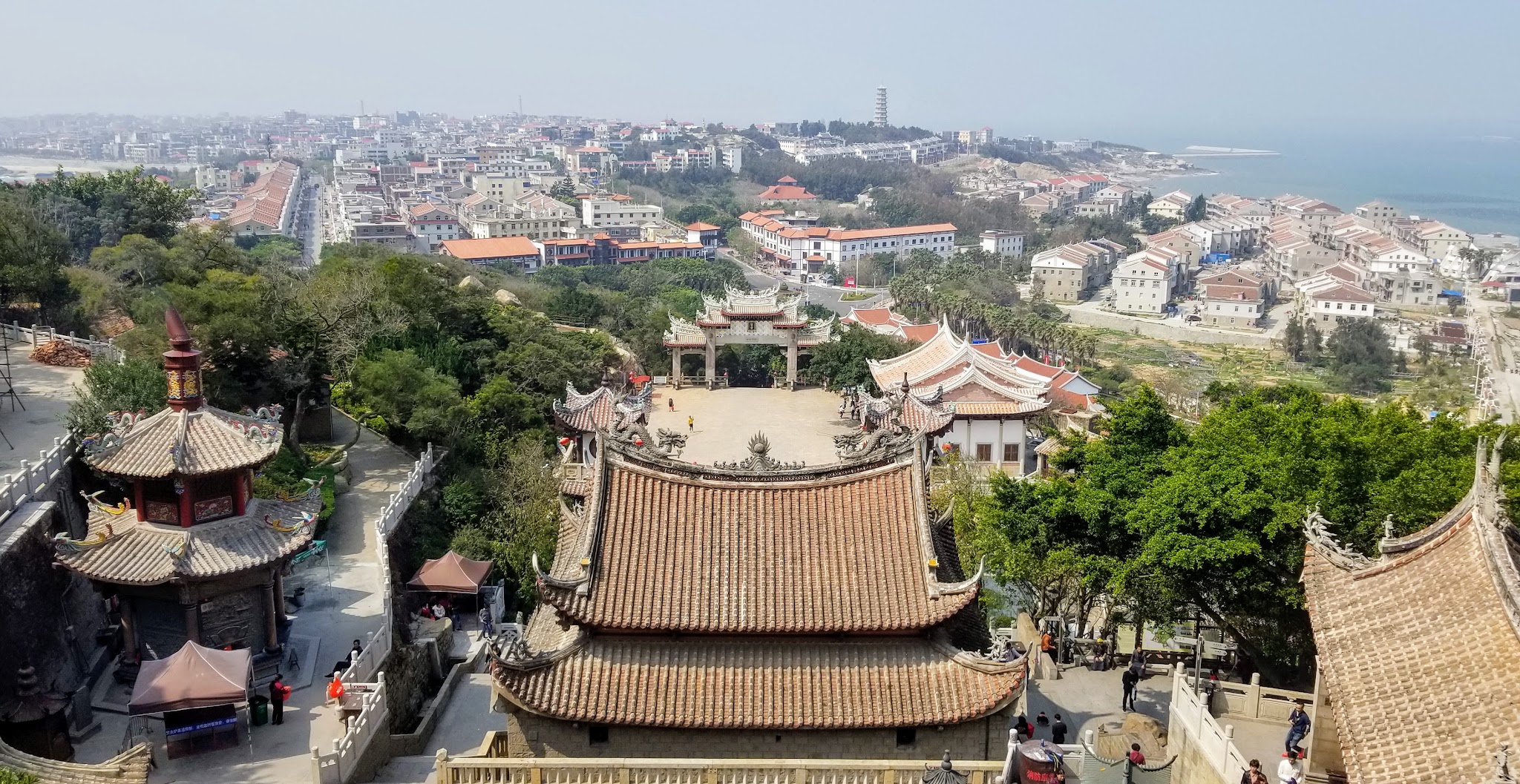
Above the rooftops
From above, the individual buildings become part of a larger landscape. Temple roofs sit among trees, with streets, homes, and the coast stretching beyond them. The view places the sacred precinct within a lived-in island, rather than separating it from the neighborhoods and water around it.
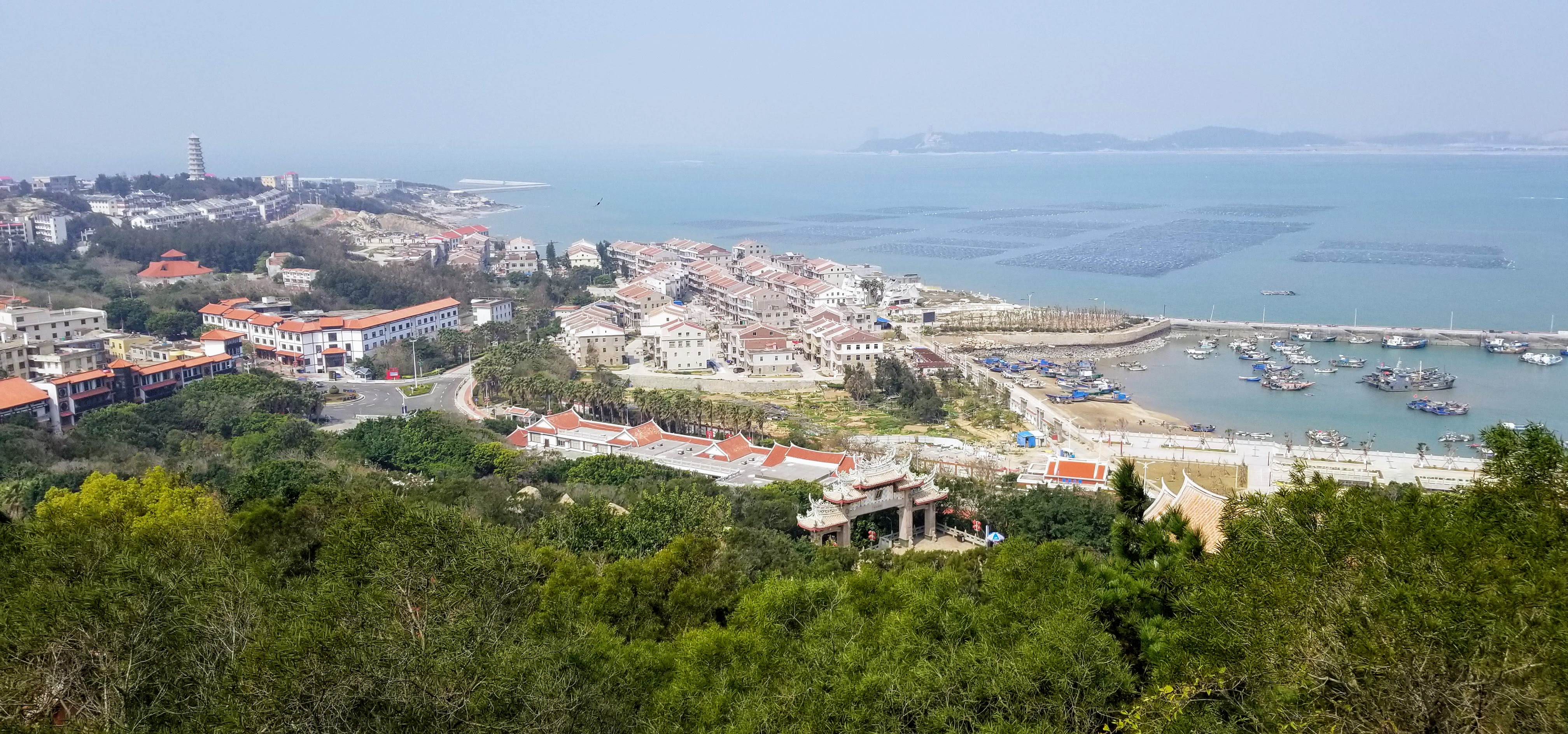
Back to the sea
The final view returns to the harbor and the open water. Fishing boats, coastal buildings, and distant islands bring the journey back to its setting. Seen alongside the temples and images of Mazu, this photograph connects the story to the sea: a landscape that shapes both everyday life and the island’s enduring traditions.
From island to ocean
Tradition remembers Lin Moniang, also called Lin Mo, as a woman from tenth-century Meizhou who helped people in danger at sea. She came to be revered as Mazu, a protector of seafarers.
Her story traveled with coastal communities, and Mazu belief and customs grew to include ceremonies, oral traditions, and shared practices far beyond the island.
In 2009, UNESCO inscribed Mazu belief and customs on its Representative List of the Intangible Cultural Heritage of Humanity.
Background: UNESCO and Meizhou Island cultural tourism profile.

Animator, designer, and illustrator
Sharing is caring
If you found value in this blog post, please take a moment to share it.